For B2B SaaS founders who need an agency that moves at founder speed. Webflow Enterprise Certified, three to six week launch, founder-direct engagement, fixed-scope pricing.







Sound familiar, founder?
Every B2B SaaS founder we talk to hits the same five problems with traditional agencies. If three of these are true for you, the issue is process, not budget.
Four-week discovery is theater you cannot afford
Most agencies want a four-week discovery phase before they design a single screen. You closed three customer deals in those four weeks. The discovery process is the actual problem.
Five-person agency meetings, zero decisions
Every meeting includes the agency account manager, the strategist, the project manager, and the design lead. None of them have decision authority. Real decisions happen offline, slowly.
The site goes stale in six months
The agency built a beautiful site. Six months later, you cannot update a customer logo without an email thread. The site is now a static brochure that contradicts the company every week.
Engineering will not touch the marketing site
Your two engineers are shipping product. The marketing site is filing tickets that compete with product features. The marketing site loses every prioritization debate.
Boutique quotes are 50K, freelancers are risky
The boutique quote is 50K and twelve weeks. The freelancer quote is 8K and a stack of risk. There is no middle option, and you do not have time to evaluate a third tier of vendors.
What changes when an agency works at founder speed
Five outcomes founder-led B2B SaaS teams notice within 60 days, from faster decisions to compounding organic traffic.

Founders drive the decisions
Founders stay in the room for the decisions that matter. The 45-minute discovery model is built for founders who do not have time for a four-week discovery phase but still want to drive positioning.
Site keeps up with the company
Marketing publishes new content in under fifteen minutes. The site keeps up with positioning iterations, customer wins, and product updates. Founders stay focused on product, not the site.
Schema, AEO, and content architecture set up at launch. Founder-led B2B SaaS companies see organic sessions compound from day one.
Schema, AEO, and content architecture set up at launch. Founder-led B2B SaaS companies see organic sessions compound from day one.
Three to six weeks, fixed scope
Three to six week launch, fixed-scope pricing, founder-friendly engagement. No hourly billing, no scope-creep surprises, no four-week discovery delays.
Founder-led, end to end
One team for design, dev, SEO, and ongoing ops. No design-dev handoff, no agency-of-record bloat. Founder-led for the kind of clarity you cannot get from a 50-person agency.
How we work with B2B SaaS founders
A seven-step process built for the velocity founder-led companies actually move at. The founder stays in the room for every decision that matters.
Discovery with the founder
One 45-minute call with the founder. We pull apart positioning, ICP, top three competitors, and pipeline. Output: a brief that drives every design and copy decision.
Information architecture
We map the site to your buyer journey: technical evaluator, economic buyer, end user, procurement. Each gets a clear path through the site.
UI and UX design in Figma
Custom design signaling craft and clarity. Founder reviews directly. Three rounds of revision. Component-driven for ongoing iteration.
Webflow development
Webflow build with CMS for blog, customers, integrations, careers. Marketing or founder publishes in fifteen minutes. Sub-2-second global load.
SEO and AEO optimization
Schema, semantic HTML, internal linking, AEO setup. Organic compounds from launch.
QA and launch
Cross-browser QA, accessibility, performance. Zero-downtime launch with founder-friendly handover and Loom walkthroughs.
Webflow Ops retainer (optional)
Most founders keep us on retainer post-launch for ongoing pages, campaigns, and content. Same-week turnaround.
See it in action
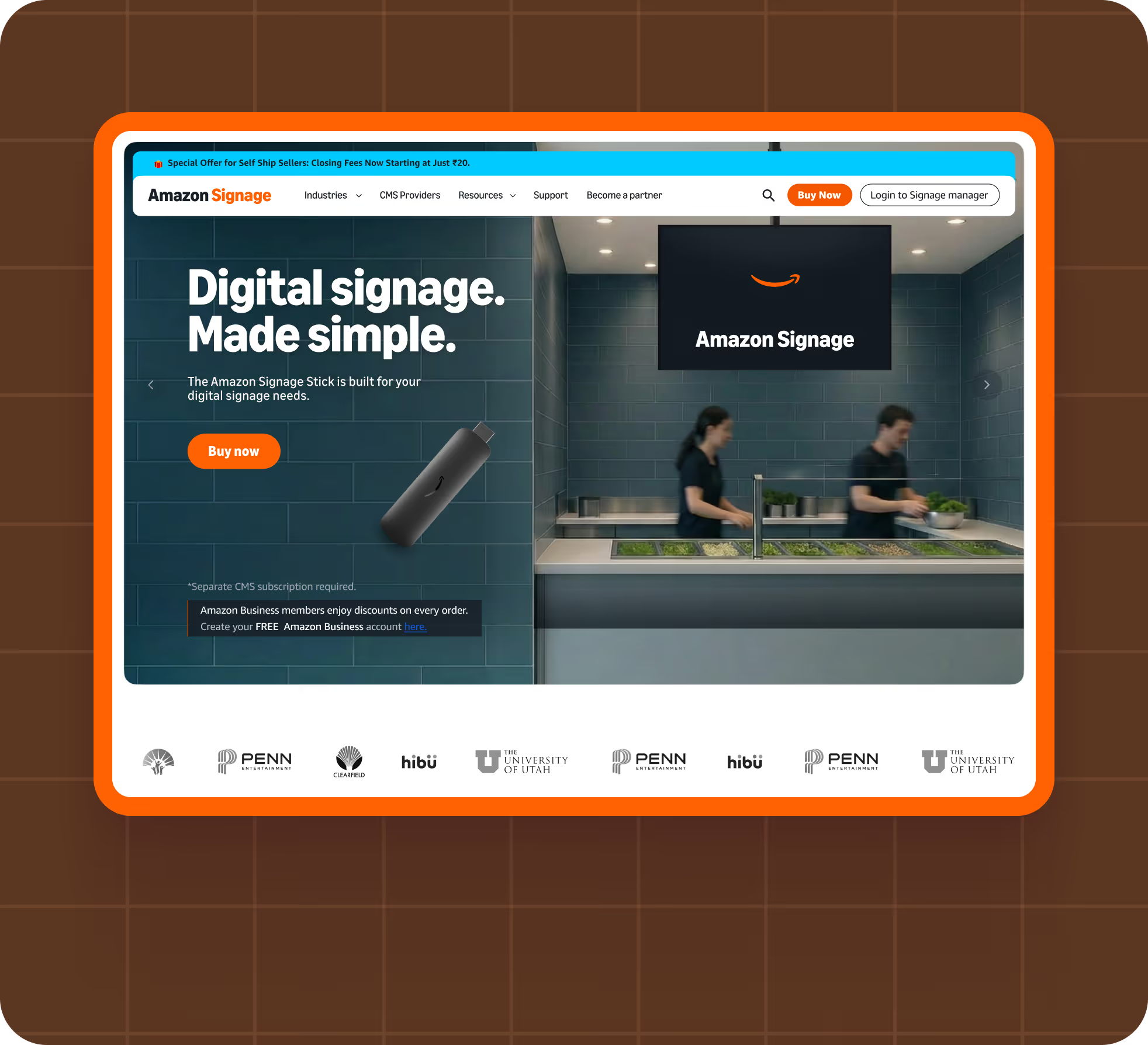

Our team revamped Amazon Signage's Webflow website, highlighting their product with an conversion focused experience.
Flowtrix built scalable Webflow components and delivered high-quality work with clear, consistent communication.

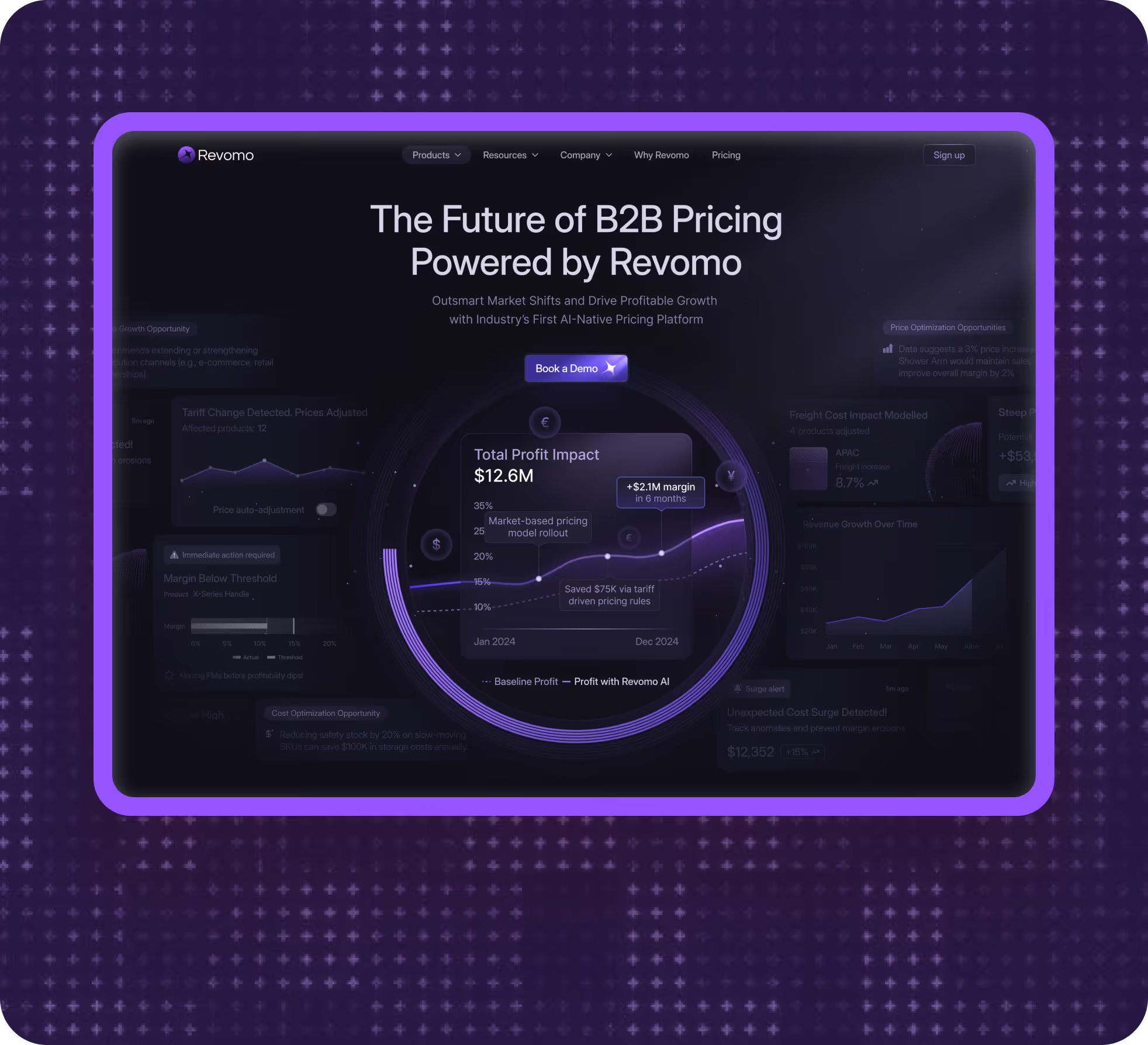

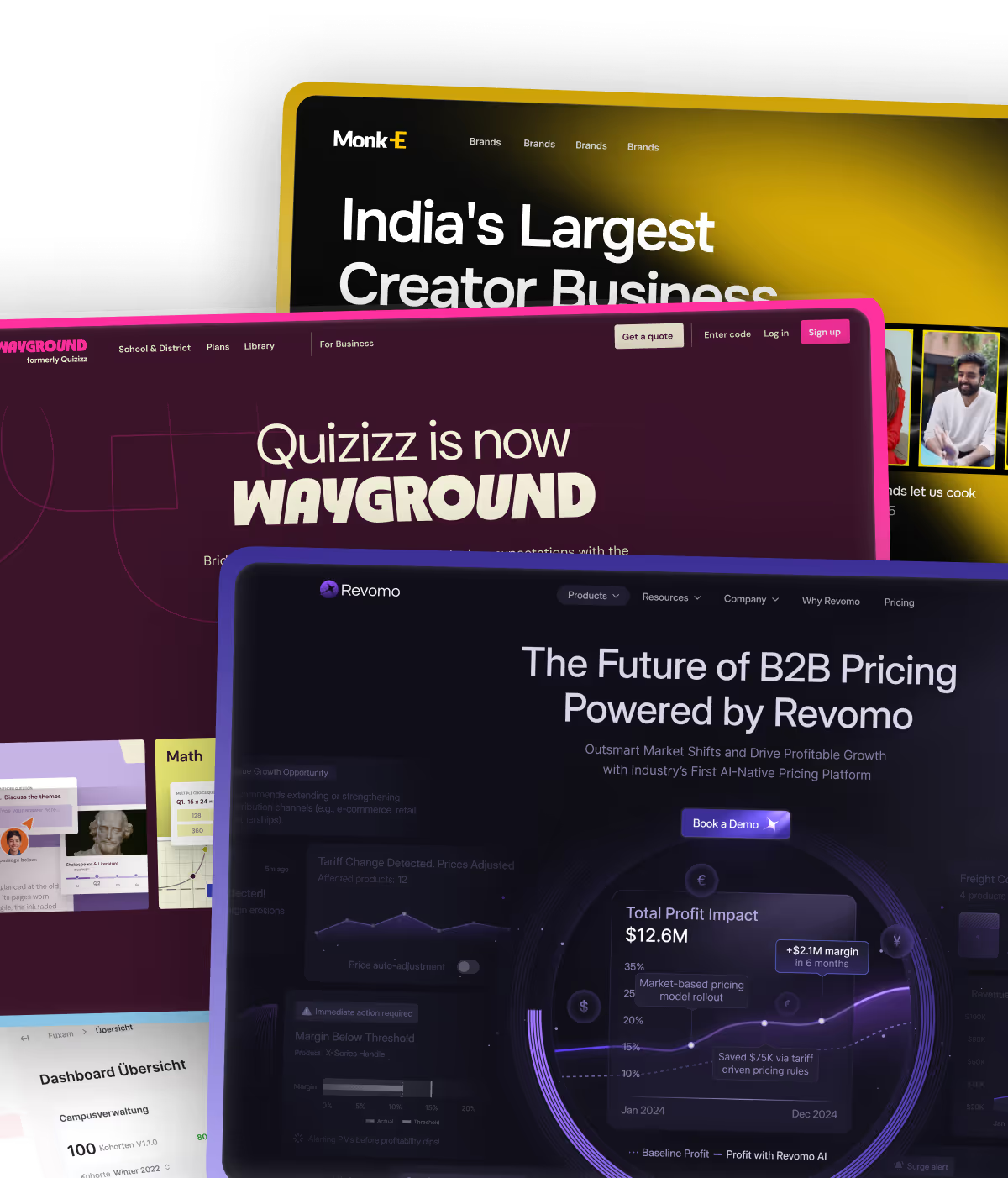
We developed a Webflow website, highlighting the use-case and features of Revomo AI and how it plays an essential role of B2B companies.
Flowtrix built scalable Webflow components and delivered high-quality work with clear, consistent communication.
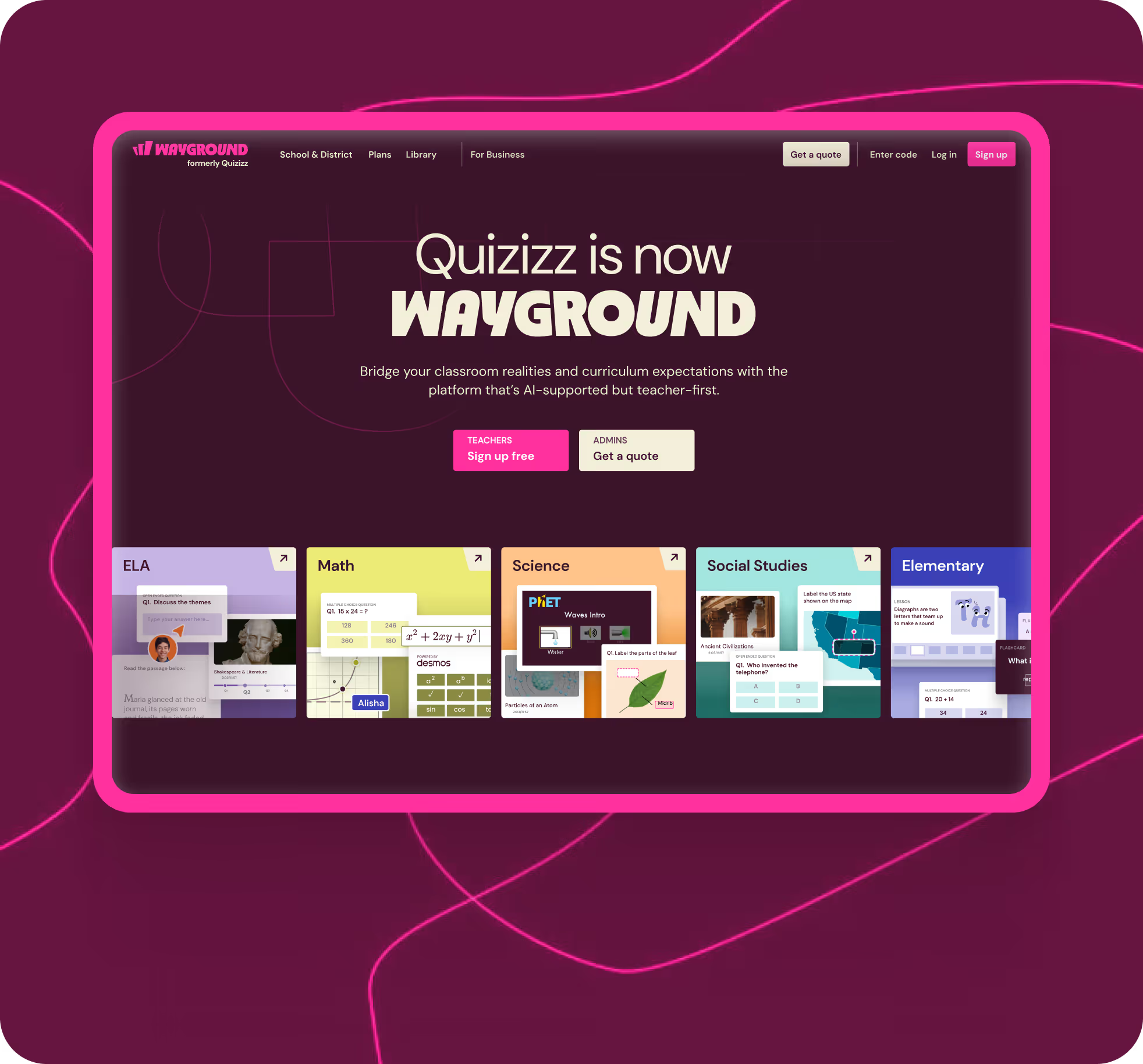

Our team led the Wayground Webflow development, showcasing their AI-powered, teacher-first platform that makes resources and assessments more accessible.
Flowtrix built scalable Webflow components and delivered high-quality work with clear, consistent communication.


Fuxam’s Webflow website presents their all-in-one, AI-powered education platform, highlighting streamlined campus management, digital learning, and exam solutions.
Flowtrix built scalable Webflow components and delivered high-quality work with clear, consistent communication.
Why B2B SaaS founders choose Flowtrix
The job of a founder-led B2B SaaS website
Founder-led B2B SaaS companies move faster than the agencies that typically serve them. Positioning evolves quarterly. Wedges sharpen. New customer segments emerge. The website needs to keep up with that velocity, and most agencies are not built for it. They run four-week discovery phases and twelve-week build cycles when the founder is making positioning decisions in real time.
Why most agencies get founder-led wrong
The default agency engagement model is designed for committee-driven marketing teams that need consensus before any decision. Discovery workshops, persona research, brand strategy phases, multiple rounds of stakeholder review. None of that fits how a founder-led company works. The founder usually has the clearest sense of positioning, the strongest opinions on craft, and the lowest tolerance for process theater.
The other failure mode is the agency that treats the founder as a stakeholder to be managed instead of a partner. Endless presentations, vague rationale, slow response cycles. Founders walk away frustrated and end up rebuilding with a different agency or in-house.
How we approach founder-led B2B SaaS
We work directly with founders. The 45-minute discovery call has the founder in the room. The positioning workshop is the founder, the lead designer, and the lead strategist. The final design review is with the founder. We move fast because the decision-maker is in the room every step.
We also build for the velocity founder-led companies actually move at. CMS collections for everything that changes regularly. Component-driven design so adding new pages is fast. SEO and AEO setup so the site compounds traffic from launch.
What is included in every founder-led B2B SaaS build
- Founder-direct engagement. The founder is in discovery, design review, and launch. Decisions happen in days, not weeks.
- CMS collections for content velocity. Blog, customers, integrations, careers, all built so the founder or a marketing hire can publish without engineering.
- Full SEO and AEO setup. Schema, semantic HTML, internal linking, AEO content patterns.
- Webflow Enterprise hosting. Sub-2-second load times, infrastructure that scales as the company grows.
Timeline and what to expect
Three to six weeks from kickoff. Most founder-led B2B SaaS engagements land between 15K and 35K dollars. Fixed-scope, fixed-price, shared after a 45-minute discovery call.




What is a use-case page and why does it matter for B2B SaaS pipeline?
A use-case page is a dedicated landing page showing how a product solves a specific problem for a specific role or workflow. Use-case pages are essential for B2B SaaS pipeline because enterprise buyers search for solutions to named problems, not products by category. A use-case page matching a buyer's exact search query — 'revenue forecasting for enterprise sales teams' — captures bottom-of-funnel intent at the moment the buyer is actively evaluating solutions. These pages consistently convert at three to five times the rate of a generic homepage visit.
How does Flowtrix build scalable use-case page systems in Webflow CMS?
Flowtrix builds use-case page systems as Webflow CMS collections so each new use case requires only a new CMS entry, not a new page build. The CMS template is designed with dynamic fields for buyer persona, problem statement, solution narrative, product screenshots or feature animations, customer quote, metrics outcome, and related integrations. A marketing team member can publish a fully designed, SEO-optimised use-case page in under 30 minutes by completing the CMS fields — with no developer involvement.
How should use-case pages be structured to rank in search and get cited by AI engines?
For traditional SEO, use-case pages need: a keyword-matched H1 ('AI-powered forecasting for revenue operations'), semantic subheadings covering the problem, the solution, and the proof, internal links to related use cases and the product page, and a clear meta title and description. For GEO, use-case pages need: a concise 'Who is this for' and 'What does this solve' section in FAQ format, FAQPage and SoftwareApplication schema markup, and entity-specific language that AI engines can extract when answering 'What is [product] used for in [role]?' queries.
How long does it take to build a VC firm website?
Most VC firm websites take 6-8 weeks from kickoff to launch. The timeline depends on portfolio size, whether you need restricted LP sections, and how much new content (team bios, thesis posts, case studies) needs to be written. Funds with content ready and decisive partners launch closer to 6 weeks; those building copy from scratch trend toward 8.
Can our team update the portfolio and thesis content without a developer?
Yes — that's the entire reason we build on Webflow. Your associate, marketing lead, or chief of staff can add new portfolio companies, publish thesis posts, add team members, and update fund information without writing code. We train your team during handover and provide a Notion playbook covering every common update.
Do you handle SEO and AI search optimization for VC sites?
Yes. We implement technical SEO (schema markup, Open Graph, sitemap structure, page speed) and AEO — content structured for AI answer engines like ChatGPT, Claude, and Perplexity. For VC firms specifically, this means your thesis content gets cited when founders ask AI assistants for investors in your space. Most VC sites are invisible to AI search. We fix that.
How do you handle LP-only sections and compliance pages?
We build restricted-access LP sections using Webflow Memberships or password-gated pages depending on your needs. Compliance content — SEC disclosures, fund formation language, IR contact — is structured cleanly so it's findable for LPs and regulators without dominating the founder-facing experience.
Do you work with India-based VC firms and global funds?
Yes. Flowtrix is based in Bengaluru and works with VC firms across India, the US, Southeast Asia, and Europe. Our team operates across timezones and most fund clients prefer async-first collaboration with weekly sync calls.





.svg)

.svg)



%201.svg)


.svg)
.svg)