






What can you expect?
This comparison will help you understand the strengths of each platform and decide which is best for your specific needs.


 Platform approach |  All-in-one visual website platform  Headless content platform |
 Website building | Build pages visually without starting from code Build the frontend separately using your preferred framework |
 Content management | CMS connected directly to the website Structured content managed independently from the frontend |
 Design control | Visual control over layouts, styles, interactions, and responsive behavior Frontend determines the visual experience |
 Development dependency | Many website changes can be handled without developers Custom frontend changes generally require development |
 Frontend | Built directly in Webflow Requires a separate frontend application |
 Hosting | Website hosting is built into the platform Frontend hosting is managed separately |
 Publishing | Design, edit, and publish from one platform Content and frontend deployment follow separate workflows |


Why teams choose Webflow
Your website shouldn't need a long development cycle every time you want to launch a new page or update an existing one. Webflow gives design and marketing teams more control over the website while giving developers the flexibility to create sophisticated digital experiences.

Design and build in one place
Turn designs into production-ready websites without handing every visual decision over to developers.
Make changes without the bottleneck
Update pages, create landing pages, change layouts, and publish content without creating a development ticket.
Simple website infrastructure
Webflow brings hosting and website management into the same platform, reducing the need to coordinate separate tools for your core website.
Create consistent experiences
Reusable components and CMS structures help teams maintain consistency across pages while making it easier to expand.
Launch faster
From new campaign pages to major website updates, teams can move from idea to live website without building a separate frontend.
Market position comparison
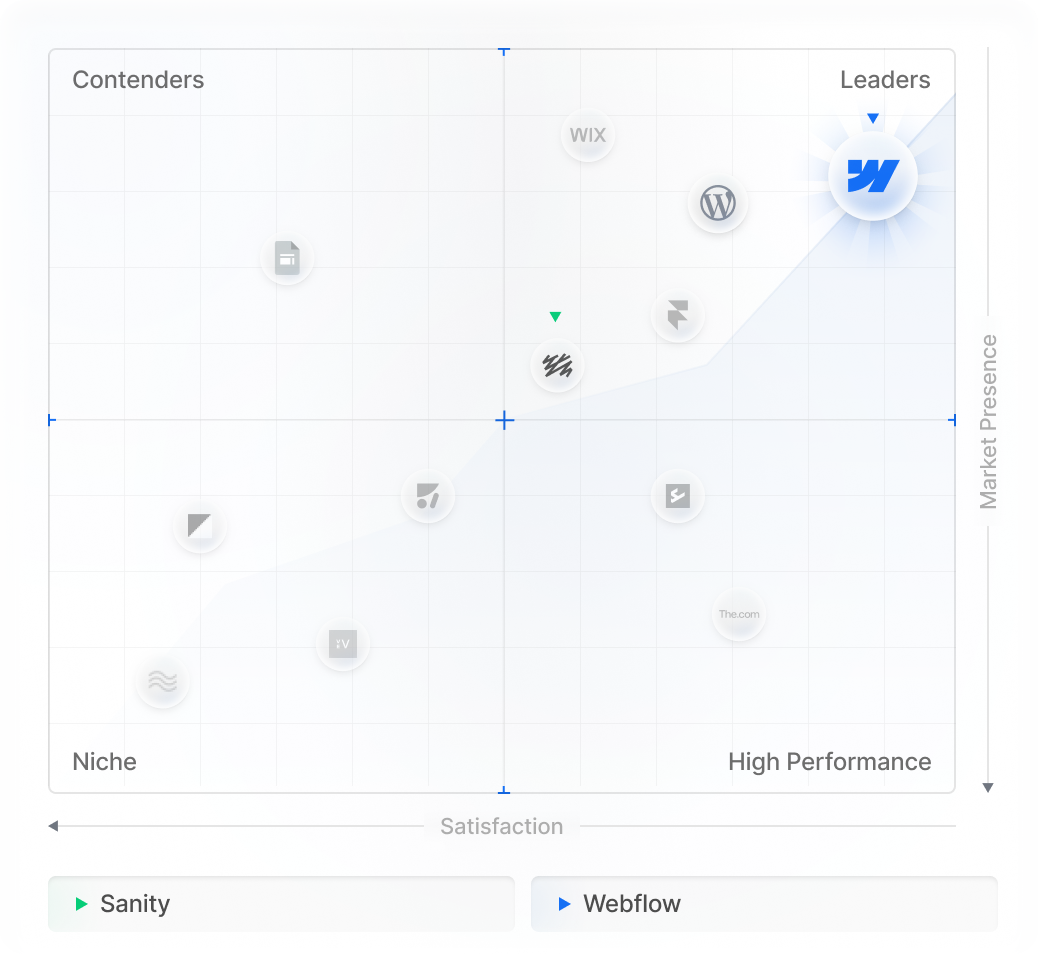
Webflow Adoption
With Webflow, your design, website, CMS, and hosting work together. This gives marketing teams more control over the finished website and reduces the number of moving parts.
With Sanity, your content sits separately from the frontend. This gives development teams more freedom to decide how that content is delivered and experienced.


What is a Webflow + Shopify hybrid and who is it for?
A Webflow–Shopify hybrid is a website architecture where Webflow handles the brand marketing experience — homepage, brand story, editorial blog, campaign landing pages, and lookbooks — while Shopify handles product pages, cart, checkout, and order management. It is ideal for consumer brands and DTC companies that need the design flexibility and editorial quality of Webflow on their marketing site, but require Shopify's battle-tested commerce engine for their buying experience and fulfilment integrations.
How does Flowtrix technically connect Webflow to Shopify?
Flowtrix connects Webflow to Shopify using Shopify's Storefront API, which provides programmatic access to product data, variant availability, and cart operations. A lightweight JavaScript layer on the Webflow site fetches live product data from Shopify (price, inventory, variants) and renders it on Webflow pages without a full page reload. Add-to-cart and checkout actions redirect to Shopify's hosted checkout for PCI compliance and payment security. The connection is implemented with fallback states for API errors and loading states for perceived performance.
Does the Webflow + Shopify hybrid hurt SEO?
No — when implemented correctly by Flowtrix, the hybrid architecture actually improves overall site SEO. The Webflow marketing site benefits from clean semantic HTML and Fastly CDN performance. The Shopify product pages are served by Shopify's CDN with proper product schema. 301 redirects ensure there is no duplicate content between the two platforms. Flowtrix handles the cross-domain URL architecture and canonical tag configuration so search engines correctly attribute authority to each platform's content.
Can Flowtrix migrate an existing Shopify store's marketing content to Webflow?
Yes. Flowtrix migrates Shopify blog posts, brand pages, and editorial content into a Webflow CMS during the hybrid setup. The Shopify product catalogue and transactional data remain in Shopify and are displayed on Webflow via the Storefront API connection. The result is a clean separation of concerns: Webflow owns the brand narrative and content, Shopify owns the commerce and fulfilment data.
Is Webflow secure enough for credit card transactions?
Absolutely. Webflow Commerce is powered by Stripe, the gold standard in online payments. It is fully PCI-DSS compliant. You never "handle" the credit card data yourself; it is processed through Stripe's secure, encrypted servers.
Can I keep my Shopify "Apps" (like Klaviyo or Smile.io)?
Yes. Most major e-commerce tools have native Webflow integrations or can be connected via Zapier/Make. We ensure your marketing automation and loyalty programs stay perfectly synced during the transition.
What is the "Headless" option?
If you have a massive catalog (5,000+ SKUs) but want Webflow's design, we can do a Headless Migration. We keep Shopify as your "database" for inventory and shipping, but use Webflow as the "front-end" that your customers see.
Does Webflow support complex variants?
Absolutely. We map Shopify's multi-variant logic (Size + Color + Material) directly into Webflow's Ecommerce CMS, ensuring your filtering and selection remains intuitive.
How does Webflow handle complex shipping rules compared to Shopify?
Webflow supports flat-rate, weight-based, and price-based shipping natively. For complex real-time carrier rates (UPS/FedEx/DHL) or international duties, we integrate tools like Shippo or Easypost, giving you the same power as Shopify but with a superior design interface.
Will I lose my customer order history during the move?
Order history doesn't natively "import" into Webflow Commerce yet. We handle this by archiving your Shopify data into a searchable database or a CRM like HubSpot, ensuring your customer support team still has access to all past purchase records.




.svg)
.svg)