





Web development has changed dramatically over the past decade, yet developers and businesses still face challenges that slow down project timelines, increase costs, and hurt website quality. From browser issues to responsive design problems, these obstacles can turn what should be straightforward into a frustrating ordeal.
The good news? Modern no-code platforms like Webflow are changing how we approach these challenges. Whether you're a startup founder trying to launch quickly or an enterprise looking for scalable solutions, understanding these common pitfalls and their solutions can save you countless hours and resources.
At Flowtrix, we've helped 120+ B2B SaaS, AI, and cybersecurity companies solve these exact challenges through strategic Webflow development. As a certified Webflow Enterprise Partner nominated for Partner of the Year 2025, we specialize in turning complex B2B websites into high-converting experiences. In this guide, we'll explore the five most common web development challenges and show how Webflow provides practical solutions that enable fast website development without sacrificing quality.
Understanding Today's Web Development Landscape
Before diving into specific challenges, it's important to understand where web development stands today. Websites must perform flawlessly across multiple devices, load quickly, maintain security, and provide smooth user experiences. Traditional development approaches often require extensive coding knowledge, multiple team members, and lengthy development cycles to achieve these goals.
The pressure to deliver fast website development has never been higher. Users expect websites to load in under three seconds, and 53% of mobile users abandon sites that take longer. Meanwhile, businesses need websites that can adapt quickly to market changes, connect with modern tools, and scale without requiring a complete rebuild.
Challenge #1: Cross-Browser Issues
One of the most frustrating web development challenges developers face is making sure their website looks and works the same across different browsers. What displays perfectly in Chrome might break completely in Safari or Firefox. These cross-browser issues happen because different browsers interpret code differently, particularly when it comes to CSS rendering, JavaScript execution, and HTML5 features.
The Traditional Development Problem
In traditional web development, addressing cross-browser issues requires:
- Manual testing across multiple browsers and versions
- Writing browser-specific CSS hacks and fallbacks
- Adding polyfills for unsupported features
- Constant watching for browser updates that might break existing features
- Extensive debugging time when issues arise
A single browser issue can consume hours or even days of developer time. According to industry data, developers spend about 20-30% of their project time on cross-browser testing and fixes alone. This not only delays project timelines but also increases development costs significantly.
How Webflow Solves Cross-Browser Issues
Webflow takes a different approach by handling cross-browser support at the platform level. When you build with Webflow development, the platform automatically:
- Creates clean, standards-based code that works across all major browsers
- Applies necessary vendor prefixes automatically for CSS properties
- Tests and validates output across Chrome, Safari, Firefox, Edge, and mobile browsers
- Updates its rendering engine to adapt to browser changes
- Provides real-time preview across different browsers
This means you can design once and trust that your website will work consistently everywhere. The platform's visual editor shows you exactly how your site will appear across different browsers, removing the guesswork and extensive testing typically required.
For businesses looking for fast website development, this feature alone can cut weeks off your project timeline. Instead of spending time debugging browser issues, you can focus on refining your design and content strategy.
Challenge #2: Responsive Design Complexity
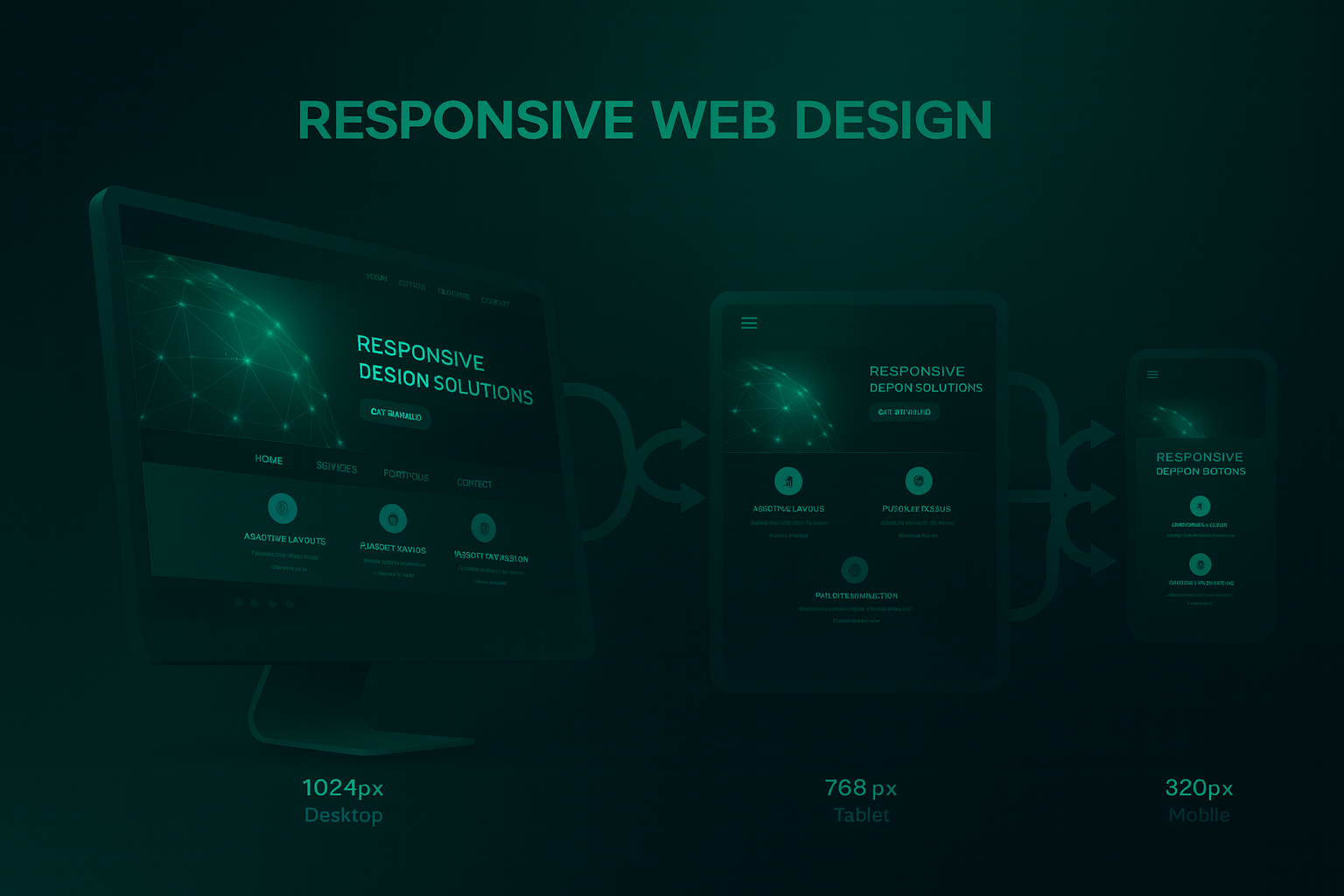
With mobile devices accounting for over 60% of web traffic globally, responsive design isn't optional - it's essential. However, creating truly responsive websites that provide optimal experiences across desktop, tablet, and mobile devices remains one of the most challenging aspects of web development.
The Responsive Design Problem
Traditional approaches to responsive design require developers to:
- Write extensive media queries for different breakpoints
- Create multiple layouts for various screen sizes
- Test carefully on numerous devices
- Balance performance considerations across device types
- Maintain consistency while adapting to drastically different screen sizes
The complexity multiplies when you consider the vast array of devices available today, from smartwatches to ultrawide monitors. Each device potentially requires specific considerations, and maintaining this across an entire website becomes incredibly time-consuming.
Many development teams find themselves in a difficult position: either spend enormous amounts of time perfecting responsive design, or compromise on mobile user experience. Neither option is ideal in today's mobile-first world.
Webflow's Approach to Responsive Design
Webflow was built from the ground up with responsive design as a core principle. The platform provides:
Visual Responsive Controls: Adjust layouts, typography, spacing, and visibility across five default breakpoints (desktop, tablet landscape, tablet portrait, mobile landscape, mobile portrait) with visual controls. No media query code required.
Flexible Layout Systems: Built-in flexbox and CSS Grid support makes it easy to create layouts that naturally adapt to different screen sizes. Elements can be configured to stack, reflow, or resize based on viewport dimensions.
Mobile-First Workflow: Design for mobile first, then enhance for larger screens, or work in reverse. Webflow handles both approaches smoothly.
Real-Time Preview: See exactly how your design looks on different devices as you work, with instant switching between breakpoints.
Responsive Typography and Spacing: Set different font sizes, line heights, and spacing values for each breakpoint, ensuring optimal readability on every device.
This visual approach to responsive design dramatically reduces development time. What might take days or weeks to code manually can be accomplished in hours with Webflow. More importantly, it allows designers to take full ownership of responsive behavior without relying on developers for every adjustment.
Challenge #3: Slow Development Speed and Time-to-Market
In the fast-paced digital landscape, speed matters. Yet traditional web development is slow. The process typically involves multiple stages (wireframing, design mockups, front-end development, back-end development, testing, and deployment) with each stage requiring handoffs between different team members.
Why Traditional Development Takes So Long
The standard web development process faces several bottlenecks:
- Design-to-code translation delays and misunderstandings
- Multiple review and revision cycles
- Dependency on developer availability for even minor changes
- Extensive testing and debugging phases
- Complex deployment processes
- Coordination challenges between designers, developers, and stakeholders
A typical business website can take 3-6 months to develop using traditional methods. For startups and businesses that need to move quickly, this timeline is simply too long. Every day without a proper website is a day of lost opportunities.
How Webflow Enables Fast Website Development
Webflow changes the development process by collapsing the traditional workflow into a streamlined approach:
Design and Development Unified: Designers can create production-ready websites without writing code, removing the design-to-code translation step entirely. What you design is what you get - no more "lost in translation" moments.
Instant Publishing: Changes go live with a single click. No deployment pipelines, no FTP uploads, no server setups to manage. Update your site and publish instantly.
No Development Bottlenecks: Marketing teams and designers can make updates on their own without waiting for developer bandwidth. This is particularly valuable for time-sensitive campaigns and content updates.
Built-In CMS: The integrated content management system means content updates don't require developer help. Create templates once, and let content teams manage ongoing updates.
Reusable Components: Build once, use everywhere. Create symbols and classes that can be reused across pages, dramatically speeding up the creation of new pages and maintaining consistency.
Rapid Prototyping: Test ideas quickly with fully working prototypes. Get stakeholder buy-in and user feedback earlier in the process, reducing costly late-stage changes.
Companies working with Flowtrix for Webflow development regularly see their time-to-market reduced by 60-70% compared to traditional development approaches. This speed advantage is crucial in competitive markets where being first can make all the difference.
Challenge #4: Maintenance Burden and Technical Debt
Launching a website is just the beginning. The real challenge often lies in ongoing maintenance, updates, and managing technical debt that builds up over time. Traditional websites built with custom code or complex frameworks require constant attention from developers.
The Maintenance Problem
Traditional web development creates ongoing maintenance challenges:
- Plugin and library updates that break features
- Security issues requiring immediate patches
- Problems with new browser versions
- Performance degradation over time
- Code that becomes increasingly difficult to modify as multiple developers touch it
- Documentation that quickly becomes outdated
- Hosting and server management complexities
Many businesses find themselves trapped in a cycle where they invest significantly in building a website, only to face mounting maintenance costs that rival the original development investment. Eventually, the technical debt becomes so overwhelming that a complete rebuild seems like the only option.
Webflow's Maintenance-Free Advantage
Webflow addresses maintenance challenges through its managed platform approach:
Automatic Updates: Webflow handles all platform updates, security patches, and performance optimizations automatically. Your website benefits from improvements without any action required on your part.
Managed Hosting: Enterprise-grade hosting is included, with automatic SSL certificates, CDN distribution, and DDoS protection built in. No server management required.
No Plugin Dependencies: Because Webflow provides native features for most common needs, you're not dependent on third-party plugins that might break or become abandoned.
Clean, Maintainable Code: The code Webflow creates is clean, semantic, and follows best practices. If you ever need to export and host elsewhere, you're working with quality code.
Version Control and Backup: Automatic backups and version history mean you can always roll back changes if something goes wrong.
Visual Editing: Future updates can be made visually without diving into code, reducing the risk of introducing bugs and making maintenance accessible to non-developers.
This dramatically reduces the total cost of ownership. While traditional websites might require ongoing developer retainers or maintenance contracts, Webflow sites can often be maintained by internal marketing teams with minimal training.
Challenge #5: Limited Design Flexibility
Perhaps the most frustrating aspect of many web development platforms is hitting creative limitations. Template-based builders offer speed but severely limit design possibilities. Fully custom development offers unlimited flexibility but requires extensive coding knowledge and time.
The Flexibility Problem
Most businesses find themselves forced to choose between two poor options:
Template-Based Builders: Quick and easy but creatively limiting. Your website looks like countless others, and customization options are restrictive. Good for basic sites but not good enough for brands that need to stand out.
Custom Development: Complete creative freedom but requires extensive coding knowledge, significant time investment, and ongoing developer dependency. Excellent for unique needs but impractical for most businesses from a cost and time perspective.
This false choice has frustrated marketing teams and designers for years. You shouldn't have to sacrifice either speed or creativity, yet traditional approaches force exactly that compromise.
Webflow's Design Freedom
Webflow removes this false choice by providing professional-grade design tools that don't require code:
Pixel-Perfect Control: Position elements precisely, create custom layouts, and control every aspect of typography, spacing, and visual design. If you can picture it, you can build it in Webflow.
Advanced Interactions and Animations: Create sophisticated animations, scroll effects, and micro-interactions without JavaScript knowledge. The interactions panel provides professional animation capabilities with a visual interface.
Custom Code When Needed: For truly unique requirements, you can embed custom code. Webflow doesn't lock you in. It provides an escape route for edge cases while handling the common 95% of needs visually.
No Template Lock-In: Start from scratch or use a template as a foundation and modify it completely. There are no locked elements or restrictions on changes.
Design System Management: Create and manage comprehensive design systems with classes, variables, and reusable components. Maintain consistency at scale while enabling creative freedom.
Integration Flexibility: Connect with thousands of third-party tools through native integrations, Zapier, or custom APIs. Webflow plays nicely with your existing tech stack.
This combination of visual power and technical flexibility makes Webflow uniquely positioned to serve both creative teams that prioritize design excellence and technical teams that need advanced features.
Real-World Impact: Webflow in Action
The theoretical advantages of Webflow are compelling, but the real proof lies in practical results. Companies across industries are using Webflow to overcome traditional web development challenges and achieve remarkable outcomes.
Faster Launches: Businesses consistently report reducing website development timelines from months to weeks. Marketing campaigns can launch on schedule instead of being held up by website delays.
Cost Efficiency: By reducing developer dependency and maintenance requirements, companies see total cost of ownership decrease by 40-60% compared to traditional approaches.
Greater Agility: Marketing teams can iterate rapidly, testing messaging, layouts, and content strategies without waiting for developer bandwidth. This agility translates directly to better business outcomes.
Superior Performance: Webflow sites consistently achieve high scores on Core Web Vitals and page speed metrics, providing better user experiences and SEO benefits.
Enhanced Collaboration: Designers, marketers, and developers can work together more effectively when everyone can see and interact with the actual website being built.
Making the Right Choice for Your Web Development Needs
Understanding these web development challenges is the first step. The second is choosing the right solution for your specific needs. While Webflow isn't the only no-code platform available, its unique combination of design flexibility, technical capabilities, and professional-grade output makes it particularly well-suited for businesses that refuse to compromise on either quality or speed.
Consider Webflow if you:
- Need to launch or update websites quickly without sacrificing quality
- Want to reduce dependency on developers for routine updates and changes
- Require pixel-perfect design control and brand consistency
- Need websites that perform excellently across all devices and browsers
- Want to minimize long-term maintenance burden and costs
- Value the ability to iterate and test quickly based on market feedback
Conclusion
The web development challenges we've explored (cross-browser issues, responsive design complexity, slow development speed, maintenance burden, and limited flexibility) have plagued businesses for years. Traditional approaches require you to accept these limitations as facts of life.
Webflow development represents a shift that refuses to accept these compromises. By providing professional-grade design tools, automatic technical optimizations, and a managed platform approach, Webflow enables fast website development without the traditional tradeoffs.
Whether you're a startup racing to launch, an enterprise managing multiple websites, or an agency serving clients, understanding how modern platforms like Webflow solve these core challenges can change your approach to web development.
The question isn't whether these web development challenges exist - they do, and they're not going away. The question is whether you'll continue accepting them or adopt solutions that make them obsolete.
Ready to overcome your web development challenges with fast website development solutions? See how Flowtrix helps B2B SaaS and AI companies turn their websites into predictable inbound and demo booking engines using Webflow. As a certified Webflow Enterprise Partner with 120+ successful projects and expertise in handling everything from strategy to SEO, we help you turn your vision into reality - faster than you thought possible.


.png)



.avif)



.svg)
.svg)

